Best Interior Paint Finish for Bathrooms in 2026: The Definitive Australian Guide
What if the secret to a bathroom that remains a sanctuary for a decade has nothing to do with the tiles you choose, but the microscopic resin density on your walls? Most homeowners across the Central Coast know the quiet frustration of seeing a fresh coat of paint bubble and peel after only two seasons of steam. It's disheartening to watch your investment succumb to mould and mildew growth despite your best efforts to keep the space ventilated. You deserve a home that feels like a professional retreat, not a constant maintenance chore.
Finding the best interior paint finish for bathrooms is about balancing technical resilience with a sophisticated aesthetic. I want to help you discover the exact finishes that withstand our local humidity and keep your retreat looking flawless for years. We'll explore the latest 2026 waterproofing standards, including the updated AS 3740 regulations, and the breakthrough moisture-resistant technologies now available. You'll learn how to achieve a durable, wipeable surface that provides the confidence of a ten-year guarantee, ensuring your bathroom feels like a luxury spa for a decade, not just a season.
Key Takeaways
- Master the unique challenges of Central Coast humidity and learn how to prevent moisture from compromising your paint film.
- Uncover the technical difference between Satin and Semi-Gloss to select the best interior paint finish for bathrooms that balances beauty with wipeable durability.
- Learn why the secret to a long-lasting finish lies in the mechanical bond and the use of specialised kitchen and bathroom primers.
- Explore how the latest 2026 Australian standards for waterproofing and ventilation influence your choice of materials and application methods.
- Gain the confidence to invest in a professional refresh that protects your home's legacy and creates a genuine spa-like sanctuary.
Why Bathroom Paint Finishes Behave Differently in Central Coast Homes
Your bathroom is the most demanding environment in your home. It isn't just the daily deluge of steam from the shower; it is the constant cycle of expansion and contraction as temperatures swing from a chilly Gosford morning to a steaming hot bath. Standard interior paints are simply not built to handle this physical stress. When you look for the best interior paint finish for bathrooms, you are searching for a coating engineered to act as a flexible, breathable shield rather than a brittle shell. Without this specialised protection, the bond between the paint and the wall can fail in as little as two seasons, leading to unsightly bubbling and costly repairs.
The Impact of Coastal Humidity
In our pocket of the world, the salt-laden air of the Central Coast adds a layer of complexity that many generic guides overlook. Residents in Terrigal, Avoca Beach, or Wamberal know that moisture behaves differently here. High humidity levels can significantly slow down drying times during application. If a painter doesn't account for these local conditions, the paint may never achieve its intended hardness, leaving it vulnerable to the salt air. Standard paints often struggle to cure properly in these conditions, whereas finishes designed for the Australian climate are formulated to thrive despite the coastal dampness.
Understanding why some paints fail while others endure requires a look at The Science of Water Resistance. In simple terms, the ratio of resins to pigments determines how well a paint repels moisture. Lower-quality films allow water vapour to penetrate the surface, where it sits against the substrate and encourages mould to bloom from behind the paint film itself. A professional-grade finish creates a dense, non-porous barrier that keeps moisture on the surface where it can be easily wiped away or evaporated by an exhaust fan.
The Sanctuary Factor: More Than Just Utility
Creating a sanctuary means balancing the need for a scrubbable surface with an aesthetic that feels soft and inviting. Light reflection plays a massive role in how a bathroom feels. In smaller, often windowless bathrooms common in many NSW homes, a finish that is too shiny can create harsh glares and highlight every minor imperfection in the plaster. We look for a finish that offers the resin density to repel water but the softness to diffuse light, turning a functional wet room into a place of genuine rest.
Viewing your bathroom as a long-term asset means investing in preservation. A high-quality kitchen and bathroom refresh central coast isn't just a cosmetic update; it's a protective measure for your property's legacy. By choosing the best interior paint finish for bathrooms, you ensure that your investment remains flawless for a decade, providing the peace of mind that comes from knowing your home's sanctuary is built to last.
Understanding Sheen: The Science of Water Resistance
When selecting the best interior paint finish for bathrooms, the decision often feels like a choice between style and survival. Most homeowners view sheen as a purely aesthetic preference, yet it is actually a precise chemical calculation. At its core, paint sheen is determined by the ratio of resins (the binders) to pigments (the colour). A higher concentration of resin creates a smoother, tighter film once cured. This dense surface acts as a microscopic shield, preventing water droplets from finding purchase and soaking into the wall. While a flat finish is essentially a landscape of tiny peaks and valleys that trap moisture, a higher sheen creates a slick plain where water simply beads and rolls away.
There is, however, a delicate trade-off that every master craftsman understands. While a high-gloss finish offers the ultimate in water repulsion, it is also incredibly unforgiving. Much like a mirror, a high shine reflects light in a way that highlights every minor undulation in your plaster or every slight ripple from a previous repair. Choosing the right level of gloss is an exercise in balance. You want enough resin to protect your home's legacy from mould, but not so much that your walls look like a roadmap of imperfections under your vanity lights.
What Is Paint Sheen and Why Does It Matter?
In technical terms, gloss levels are measured by the amount of light reflected back from the surface at a 60 or 85-degree angle. For a humid Central Coast home, this measurement is a proxy for bacterial resistance. A smoother finish provides fewer "anchors" for mould spores to take root. Paint sheen is the ratio of protective resins to pigments that determines a surface's ability to repel water and resist bacterial growth in high-humidity environments. By opting for a finish with a higher resin count, you are essentially sealing your sanctuary against the invisible threats of steam and condensation.
The Evolution of Modern Matte
Can you actually use a matte finish in a bathroom in 2026? Traditionally, the answer was a firm no. Flat and matte paints were the enemy of the wet area because their porous nature invited moisture to settle. However, paint technology has undergone a significant transformation. We now see "washable" matte finishes that use advanced polymers to mimic the water-shedding properties of their shinier predecessors. It is vital to distinguish between a standard matte and a specialised "moisture-resistant" matte. One is designed for a quiet bedroom, while the other is engineered for the steam of a morning shower.
If you are unsure which technology suits your specific space, seeking advice from a trusted local professional can ensure your choice stands the test of time. While the allure of a velvet-flat wall is tempting, sticking to tradition with a high-quality satin or semi-gloss remains the safest path for high-traffic family bathrooms where durability is the primary concern. Modern tech is impressive, but the physics of resin density still dictates which finishes will truly last a decade.
The Verdict: Comparing Satin, Semi-Gloss, and High-Gloss
Selecting the best interior paint finish for bathrooms requires more than just a glance at a colour swatch; it demands a strategic choice based on how you use the space. In a busy Central Coast family home, the main bathroom often functions as a high-traffic zone where steam and splashes are constant. Conversely, a guest powder room might prioritise a soft, inviting atmosphere. By understanding the practical strengths of each finish, you can ensure your renovation looks as good in five years as it does on day one.
Satin Finish: The Designer’s Choice
Satin is often called the "Goldilocks" finish because it sits perfectly between a dull matte and a high shine. It provides enough of a gentle glow to feel premium without the plastic-like appearance of older gloss paints. This makes it an ideal choice for bathroom walls where you want to hide minor plaster imperfections while still maintaining a wipeable surface. Satin handles soap scum and water spots reasonably well, making it a sophisticated option for ensuites or parents' retreats where the humidity is managed by modern ventilation.
Semi-Gloss: The Master Craftsman’s Reliable Standard
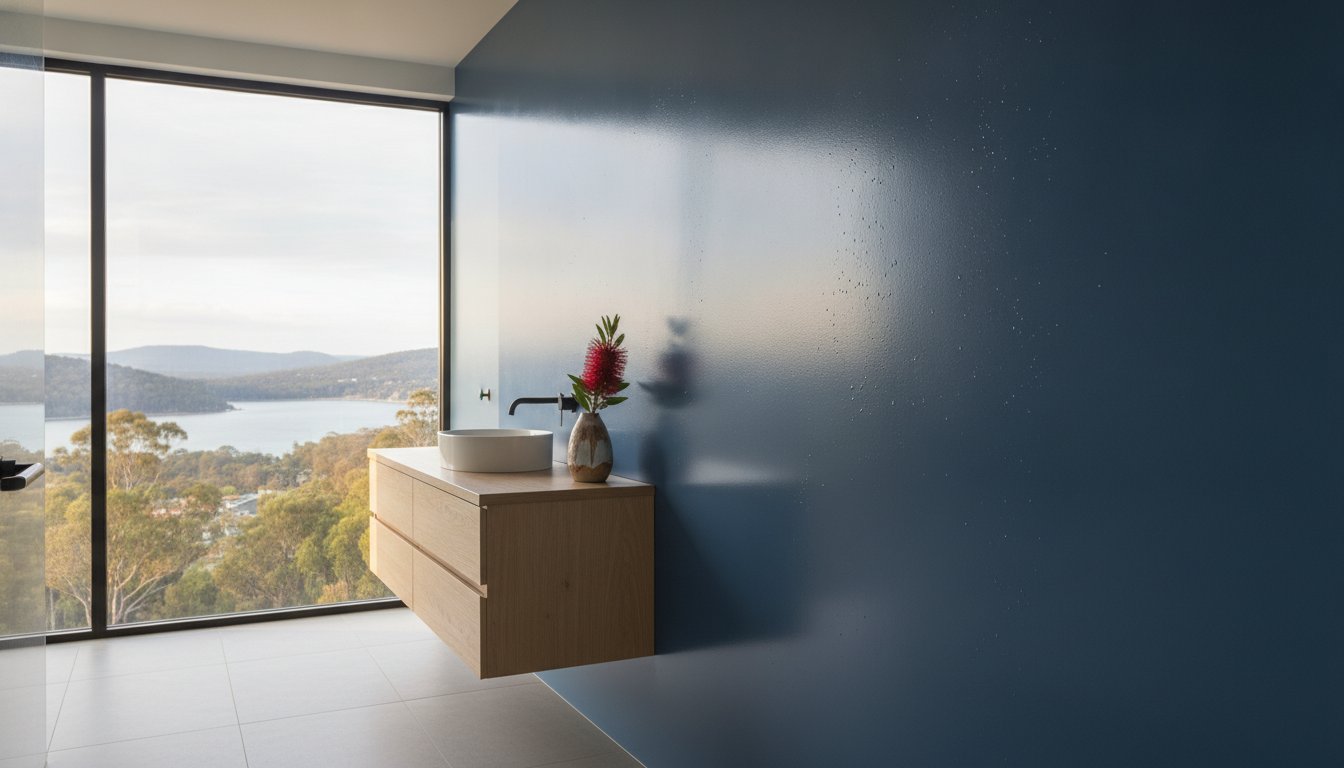
For the main family bathroom, semi-gloss remains the practical powerhouse. Its superior moisture-shedding capabilities make it the best interior paint finish for bathrooms that endure heavy daily use. We frequently recommend a semi-gloss finish for ceilings, as this is where condensation often lingers longest. A high-resin semi-gloss prevents "ghosting"—those dark, unsightly patches where moisture and dust cling to the surface—and stops mould from taking hold in the corners.
Applying semi-gloss requires a steady hand to avoid a streaky or uneven appearance. To achieve a professional result, it's vital to maintain a "wet edge" during application, ensuring each stroke blends seamlessly into the last. This creates a uniform, glass-like barrier that allows water droplets to bead and roll away before they can penetrate the film.
High-Gloss for Trim and Detail
While high-gloss might be overwhelming on a large wall, it is the undisputed king of durability for smaller details. We reserve this finish for high-impact areas like skirtings, which must withstand the daily assault of vacuum cleaners and mops. Using a high-gloss finish for door and architrave painting creates a beautiful, sophisticated contrast against satin or semi-gloss walls. This layering of sheens adds a sense of architectural depth to your sanctuary while providing the toughest possible protection for the most vulnerable parts of the room.

Avoiding the Peel: Professional Prep for a Long-Lasting Finish
Even the best interior paint finish for bathrooms is destined to fail if it cannot achieve a proper mechanical bond with the wall. In the trade, we often see beautiful renovations ruined because the coating simply sat on top of the surface rather than "biting" into it. This lack of adhesion is the primary reason behind the heartbreaking sight of paint sheets lifting away from the ceiling like old wallpaper. To prevent this, you must look beyond the topcoat. Using a specialised "Kitchen & Bathroom" sealer or primer is non-negotiable. These primers are formulated with high-performance resins that act as a bridge between the old substrate and your new, moisture-resistant finish.
Many homeowners find themselves asking why does paint peel after a few years even when they've bought premium tins. The answer often lies in an invisible layer of contaminants. Over time, bathrooms accumulate a film of body oils, soaps, and hairspray residue that standard cleaners won't touch. Our "Sugar Soap" secret involves a meticulous scrub of every square centimetre. This process strips away these hidden barriers, ensuring the surface is chemically clean and ready to receive the primer. If you skip this, you are essentially painting over a layer of grease, which is a guaranteed recipe for future failure.
Mould Prevention and Treatment
Painting over active mould is a disaster in the making. It doesn't kill the spores; it merely hides them while they continue to feed on the moisture trapped behind the film. We treat every surface with a professional-grade fungicidal wash before the first drop of paint is applied. Premium bathroom paints in 2026 now come with advanced anti-microbial additives that inhibit growth, but these are a secondary line of defence. Your primary protection remains proper ventilation. Under the latest National Construction Code (NCC) 2022 and 2026 provisions, exhaust fans must vent directly outside to ensure your paint film isn't constantly submerged in stagnant, humid air.
The Master Painter’s Prep Checklist
Achieving that "glass-like" professional feel requires patience and a commitment to the details. We advocate for a light sand between every single coat. This removes tiny dust nibs and creates a slightly textured surface for the next layer to grip. It's also vital to respect the clock. While drying refers to the evaporation of solvents from the paint surface, curing is the chemical process where the film reaches its maximum hardness and water resistance. This is why we strictly advise clients not to use the shower for at least 48 hours after the final coat. If you introduce steam too early, you risk "surfactant leaching," which leaves permanent, sticky streaks on your beautiful new walls.
If you want to ensure your sanctuary is protected by a finish that lasts a decade, contact our team of master painters for a consultation today. We understand the technical requirements of Central Coast homes and take the time to prepare your surfaces correctly from the very first coat.
Elevating Your Sanctuary with a Professional Bathroom Refresh
A bathroom is more than a utility room; it is the space where your day begins and ends. When you choose the best interior paint finish for bathrooms, you aren't just applying a colour to a wall. You are installing a protective layer that defines the atmosphere of your most private sanctuary. A fresh, expertly applied coat of paint has the power to transform a dated, tired space into a bright, modern retreat that feels like a luxury spa. By selecting a finish that reflects light beautifully while standing up to the rigours of Central Coast humidity, you breathe new life into the room without the need for a full structural renovation.
Investing in a kitchen and bathroom refresh central coast provides an immediate uplift to your home's aesthetic and its market value. However, the high-sheen finishes required for moisture resistance are notoriously difficult to apply. Many DIY enthusiasts find that what looked like a simple weekend project results in visible brush marks, uneven "flashing", and a finish that looks more like plastic than porcelain. A master craftsman understands how to manipulate these modern coatings to achieve a level of depth and clarity that a roller alone cannot provide.
The Professional Difference
Our approach combines time-honoured techniques with the latest 2026 coating technologies. We pride ourselves on achieving a flawless, spray-like finish using traditional tools, ensuring every corner and architrave is perfectly coated without the mess of overspray. We understand that your home is your sanctuary, so we focus on minimising disruption, keeping our workspace tidy, and working efficiently to return your bathroom to you as quickly as possible. When you work with us, you benefit from the peace of mind that comes with a 28-year veteran's guarantee. We don't just paint for the season; we paint for the decade.
Ready to Revitalise Your Bathroom?
Choosing the best interior paint finish for bathrooms shouldn't be a guessing game. Every home on the Central Coast is unique, from the salt-air exposure in Terrigal to the leafy, humid pockets of the hinterland. We offer tailored colour and finish consultations to ensure your choice complements your lighting, your tiles, and your lifestyle. We take the stress out of the process, providing a clear path forward from the initial prep to the final, gleaming coat.
If you are ready to transform your bathroom into a durable, beautiful sanctuary, we are here to help. Contact Martin and the team today to discuss your project and discover how a professional touch can preserve your home's legacy for years to come.
Secure Your Sanctuary's Future
Your bathroom should be a place of enduring beauty, not a recurring maintenance headache. By understanding the critical role of resin density and the unique technical requirements of our Central Coast climate, you can now move forward with absolute confidence. Remember that the best interior paint finish for bathrooms is only as strong as the professional preparation beneath it. From the meticulous removal of invisible contaminants with sugar soap to the patient, necessary curing of every protective coat, these details define the difference between a single season of shine and a full decade of durability.
Martin and the team at Central Coast House Painters bring over 28 years of local experience to every residential transformation. As a locally owned and operated business, we treat your home's legacy with the same care and precision we would our own. We invite you to Book Your Master Craftsman Bathroom Consultation today. Let's work together to revitalise your space and create a spa-like sanctuary that remains flawless and mould-free for years to come.
Frequently Asked Questions
Is satin or semi-gloss better for bathroom walls?
Satin is generally the preferred aesthetic choice for modern ensuites, while semi-gloss remains the practical standard for high-traffic family bathrooms. Satin diffuses light beautifully to hide minor wall undulations, whereas semi-gloss offers a tighter resin film that sheds water more aggressively. Choosing the best interior paint finish for bathrooms depends on your household's daily needs; if you have young children splashing about, the extra durability of semi-gloss is a wise investment.
Do I really need special "bathroom paint" or is it a gimmick?
Specialised bathroom paint is a necessity because it contains significantly higher resin levels and anti-microbial additives that prevent mould growth. Standard interior paints are often too porous, allowing steam to penetrate the film and cause the coating to fail within a few seasons. These professional-grade formulations are engineered specifically to withstand the unique humidity levels found in Central Coast homes, providing a resilient shield that standard paints simply cannot match.
Can I use matte paint in a bathroom if I have good ventilation?
You can use matte paint only if it is a specialised, moisture-resistant formulation designed specifically for wet areas. Standard matte finishes are traditionally the enemy of the bathroom because their microscopic texture traps moisture and invites mould spores to settle. Even with excellent ventilation, a non-specialised matte will likely absorb steam and peel. For a velvet-flat look, always ensure the tin explicitly states it is suitable for high-humidity environments.
How long should I wait to shower after painting the bathroom?
You should wait at least 48 hours before using the shower to allow the paint film to cure properly. While the surface may feel dry to the touch within hours, the chemical curing process takes much longer to achieve full water resistance. Introducing steam too early can cause surfactant leaching, which results in permanent, sticky streaks on your new walls. Patience during this window is the key to ensuring your investment lasts for a decade.
Why is the paint on my bathroom ceiling bubbling or peeling?
Bubbling on a bathroom ceiling is usually caused by a loss of adhesion due to moisture trapped behind the paint film or poor surface preparation. If the previous layer was not properly cleaned with sugar soap or if a specialised primer wasn't used, the mechanical bond will fail. Steam eventually finds a microscopic entry point, forcing the paint away from the substrate and creating the unsightly blisters that eventually lead to large sheets of peeling paint.
What is the best paint finish for a small powder room?
A satin finish is almost always the best choice for a small powder room. Since these spaces don't typically have a shower or bath, they don't face the same extreme humidity challenges as a main bathroom. This allows you to prioritise a sophisticated, soft aesthetic. Satin provides a gentle glow that makes small spaces feel more expansive and luxurious without the harsh reflections that higher gloss levels can create in tight, windowless quarters.
How do I clean my bathroom walls without damaging the paint finish?
The best way to clean your walls is with a soft microfibre cloth and a diluted, non-abrasive detergent. Avoid using harsh chemical cleaners or scouring pads, as these can "burnish" the surface and leave permanent dull spots in the sheen. For stubborn marks, a gentle wipe is usually sufficient if you have used the best interior paint finish for bathrooms, as the high resin content makes the surface naturally resistant to staining.
Can I paint over old tiles with these bathroom finishes?
No, you cannot use standard interior bathroom paints to coat old ceramic tiles. Tiles are non-porous and require a specific tile-painting system, often involving a high-adhesion specialty primer and a dedicated tile epoxy or urethane topcoat. While we specialise in walls, ceilings, and timber trim, painting over tiles with wall paint will result in immediate peeling. Always use products specifically engineered for ceramic surfaces to ensure a lasting bond that withstands daily cleaning.