Why Does Paint Peel After a Few Years? The Truth About Interior Paint Failure
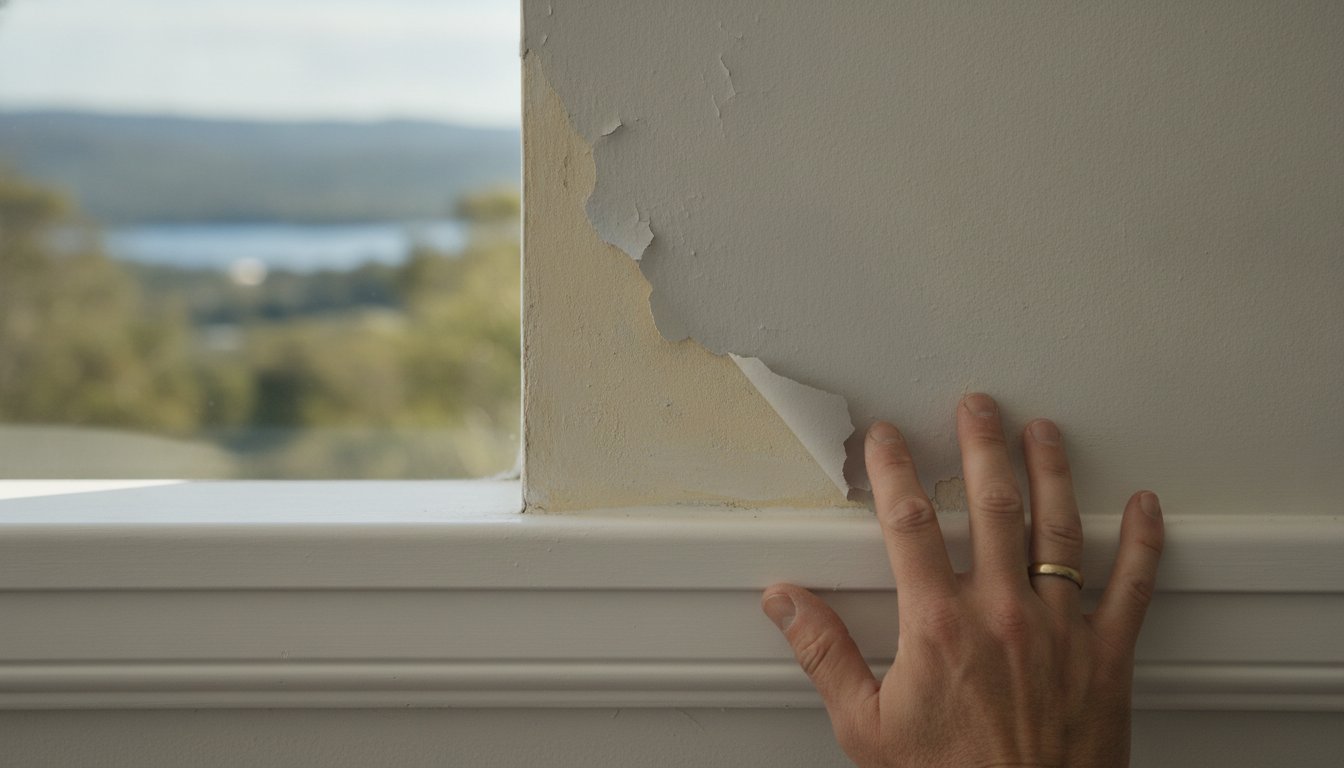
Last Tuesday, a local homeowner on the Central Coast discovered a thin, brittle flake of paint sitting on their skirting board, just three years after a full renovation. It is a heartbreaking sight. You likely find yourself asking, why does paint peel after a few years when it looked so flawless on day one? It feels like a betrayal of your hard-earned money and the vision you had for your sanctuary.
We understand that aesthetic embarrassment and the fear of a massive, dusty repair bill are the last things you want to deal with. You deserve a home that reflects your pride, not one that requires constant touch-ups. This article will reveal the "Invisible Prep Gap" that separates a seasonal fix from a professional finish. You will discover the hidden technical reasons your interior surfaces are failing and how a commitment to the AS/NZS 2311:2017 standard ensures a result that lasts a decade.
We will examine the critical role of moisture, bonding, and surface integrity, providing you with a clear path to a permanent solution and the peace of mind that comes from true craftsmanship.
Key Takeaways
- Move beyond the "bad paint" myth and understand how mechanical and chemical adhesion forms the foundation of a lasting finish.
- Uncover the truth about why does paint peel after a few years, particularly the "latex over oil" trap that often plagues older timber architraves and doors.
- Recognise the importance of the 80/20 rule, where meticulous preparation like feathering creates a seamless bond that DIY shortcuts simply cannot replicate.
- Learn how to navigate the unique environmental challenges of the Central Coast, from high humidity to salt air intrusion in coastal suburbs like Terrigal.
- Identify how partnering with a Master Craftsman ensures your interior renovation is a decade-long legacy rather than a seasonal repair.
Why Does Paint Peel After a Few Years? Debunking the Bad Batch Myth
When you see a sheet of paint curling away from your living room wall, your first instinct is likely to look at the half-empty tin in the garage. It is easy to blame the manufacturer or assume you bought a "bad batch." In reality, modern premium paints are formulated to exacting standards, and product defects are incredibly rare. If you are wondering why does paint peel after a few years, the answer is almost never found in the liquid itself, but in the physics of the bond between the paint and your wall.
Peeling is almost always a failure of adhesion. Adhesion is the invisible force holding your home's aesthetic together, and it comes in two distinct forms. Mechanical adhesion occurs when the paint "bites" into the microscopic pores and profile of a surface. Chemical adhesion happens at a molecular level, where the coating creates a permanent link with the substrate. When these bonds are compromised, the paint film loses its grip and begins to lift. While there are many common reasons for paint failure, they generally fall into three categories: contamination, incompatibility, and environmental stress.
Many homeowners attempt to fix a small patch of peeling by "slapping on a second coat" to hide the blemish. This is a dangerous shortcut. Adding a fresh layer of paint increases the weight and surface tension of the film. If the underlying bond is already weak, the tension of the new paint drying will actually pull the old layers off the wall even faster. It’s a bit like trying to fix a loose bandage by adding more tape on top; eventually, the entire stack just falls away.
The "Bad Paint" Misconception
It is far more comforting to blame a product than a process. However, even the most expensive architectural coatings are not "magic glue." They require a stable, porous, and clean foundation to perform their job. Adhesion failure occurs when the internal surface tension of the drying paint film exceeds the strength of its bond to the substrate. Once that balance is tipped, failure is inevitable, regardless of the paint's price tag.
While the environmental challenges differ between regions, the core science of surface preparation is a global standard for quality. For those looking for expert services in British Columbia, you can discover BC Interior Painting Pros to see how they handle residential and commercial projects with the same rigorous attention to detail.
Similarly, My Paint Job Singapore provides expert residential and commercial painting services in Southeast Asia, demonstrating that meticulous preparation is a global necessity for enduring results in any climate.
For property owners seeking similar high-end finishes in the United States, you can learn more about Crandall Painting & Stucco to see how they apply these rigorous restoration standards to residential and commercial projects in Arizona.
The Role of Surface Contamination
Invisible layers of dust, skin oils, and cooking grease are the silent killers of a professional finish. In kitchens and open-plan living areas, aerosolised fats settle on walls, creating a slick barrier that prevents paint from biting into the surface. Even your cleaning routine can cause issues. If sugar soap or heavy detergents aren't thoroughly rinsed with fresh water, they leave a chemical residue that interferes with the paint's chemistry. A wall that looks clean to the eye can still be technically "dirty" at a microscopic level, making it impossible for a new coat to hold on for more than a few seasons.
This emphasis on microscopic cleanliness is a standard shared by property maintenance professionals across all sectors. If you are managing a business environment and want to ensure a similarly high standard of hygiene, you can learn more about Tidy Masters and their approach to professional office cleaning.
The Chemistry of Failure: Why Kitchens and Bathrooms Peel First
Kitchens and bathrooms are the most demanding environments in any Australian home. They serve as the front lines where paint is subjected to a relentless cycle of heat, steam, and chemical exposure. While a living room wall might stay pristine for a decade, the surfaces in your wet areas are under constant physical stress. Understanding why does paint peel after a few years in these specific rooms requires a look at the molecular battle happening under the surface.
Thermal expansion is a silent culprit. When you take a hot shower or boil a pot of pasta, the temperature in the room rises rapidly. This heat causes the paint film to expand. As the room cools, the paint contracts. Over time, this constant "breathing" causes the paint to lose its elasticity. If the coating is brittle or low-quality, it eventually snaps, creating hairline fractures that allow moisture to seep in. Modern acrylic finishes are engineered with better "breathability" and flexibility to handle this movement, but even the best product will fail if it isn't bonded correctly to the substrate.
Effectively managing these indoor temperature fluctuations is a key component of building health. For those looking at broader home efficiency, Third Coast Spray Foam provides specialised insulation solutions that help stabilise internal environments and reduce the thermal stress placed on interior paint finishes.
The "Latex over Oil" trap is perhaps the most common reason for failure in older Central Coast homes. For decades, Doors & Architraves Painting was almost exclusively done with high-gloss oil-based enamels. These surfaces are incredibly hard and slick. If a previous painter applied modern water-based latex paint directly over that old enamel without a proper "bridge" primer, the new layer has nothing to grip. It essentially sits on the surface like a sheet of plastic, waiting for the first sign of humidity to let go and shed its skin.
Incompatible Coatings: The Oil vs. Water Battle
New water-based paints cannot grip old, glossy oil-based enamels without meticulous mechanical sanding and a high-quality specialty primer. You can often identify this failure with a simple "fingernail test" on your skirtings or door frames. If you can easily scrape the top layer of paint off with your nail, exposing a shiny, intact layer underneath, the previous job skipped the essential preparation steps required by the AS/NZS 2311:2017 standard. Transitioning between these chemical bases is a delicate process that requires a Master Craftsman's touch to ensure a permanent bond.
Moisture Traps and Efflorescence
Sometimes the problem starts from within the wall itself. If moisture from a slow leak or poor external sealing gets behind the paint film, it creates a bubble. In masonry or plaster surfaces, this moisture often carries dissolved minerals to the surface. This is known as efflorescence. As the water evaporates, the salts crystallise under the paint, physically pushing the coating off the wall in a white, powdery mess. Ensuring your bathroom fans are functioning and your seals are tight is your best defence against this internal sabotage. If you’re seeing these signs in your wet areas, our team specialising in Kitchen & Bathroom Painting can assess the substrate before the first drop of paint is even poured.
Scrape, Sand, or Shortcut? Comparing DIY Prep to Professional Standards
The secret to a finish that lasts a decade rather than a season isn't found in the paint tin. It is found in the hours of meticulous labour that happen before the first drop of colour is even poured. In the trade, we often say that a professional result is 80% preparation and 20% application. When homeowners ask why does paint peel after a few years, the culprit is almost always a shortcut taken during those critical early stages. While a DIY approach might involve a quick scrape and a prayer, a Master Craftsman follows a rigorous framework to ensure the substrate is ready for a permanent bond.
This commitment to meticulous preparation is a hallmark of industry veterans like performancepainting.net.au, who have spent decades perfecting the techniques that prevent premature peeling.
One of the most misunderstood techniques is "feathering." When paint begins to peel, simply scraping away the loose flakes is insufficient. If you paint directly over a scraped area, you leave a sharp, microscopic "cliff" where the old paint meets the bare wall. This edge becomes a point of high tension as new paint dries, eventually leading to further lifting. Professional feathering involves sanding the edges of the remaining paint into a smooth, gradual gradient. This removes the stress points and allows the new coating to transition seamlessly, making the repair invisible and structurally sound.
We also prioritise the "Dust-Free" illusion. Many believe a quick wipe with a damp rag is enough, but microscopic dust is a primary bond-breaker. We utilise professional vacuum-assisted sanding systems that capture 99.9% of particles at the source. This isn't just about keeping your home sanctuary clean; it's about ensuring the surface is surgically prepared so the paint can achieve maximum mechanical adhesion. Without this, you are essentially painting over a layer of ball bearings that will eventually cause the film to slide right off.
The Professional Preparation Framework
- Mechanical Bonding: We use specific grit sequences to "scuff" the surface, creating microscopic "teeth" that allow the paint to grab onto the wall.
- Chemical Bonding: On difficult, non-porous surfaces like old gloss enamels, we apply specialised Etch or ESP primers that create a chemical bridge where mechanical sanding alone isn't enough.
- Strategic Priming: We distinguish between a primer (which seals and bonds) and an undercoat (which builds film thickness and levels the surface). Knowing when to use which is the difference between a failing finish and a legacy result.
Why "Cheap" Quotes Lead to Peeling
There is a direct, undeniable correlation between a low-priced quote and the longevity of your paint job. Sanding and preparation are the most time-consuming parts of the process. When a contractor provides a cut-price estimate, they are usually "saving" money by skipping the hours required for thorough sanding and multi-stage priming. These "one-coat wonders" might look acceptable for six months, but they fail to build the necessary film thickness to withstand the Australian climate. Understanding the professional interior painting cost per room NSW helps you see that you aren't just paying for paint; you are investing in the invisible prep work that prevents you from asking why does paint peel after a few years down the track.

The Central Coast Factor: Humidity and Salt Air in NSW Homes
Living on the Central Coast offers a lifestyle of unparalleled beauty, but the very elements that make our region so attractive are often the silent enemies of your interior decor. The unique micro-climates of New South Wales, from the heavy valley humidity of Gosford to the salt-laden breezes of Terrigal and Avoca, create a volatile environment for architectural coatings. If you have been left wondering why does paint peel after a few years, the answer often lies in how your painter managed these regional environmental stressors during the application phase.
The "Dew Point" is a critical factor that many fly-by-night contractors ignore. In areas like Gosford, where humidity can spike overnight, painting too late in the afternoon can be a recipe for disaster. If the temperature drops and moisture settles on the curing paint film before it has fully "flashed off," the bond is compromised from the very first day. This trapped moisture creates microscopic pockets that eventually expand, leading to the bubbling and flaking that ruins your home sanctuary. We utilise local knowledge and precise timing to ensure every coat is applied within the optimal atmospheric window.
Managing Coastal Humidity
High humidity levels don't just slow down drying times; they change the chemistry of the paint. During the humid summer months, we often use industrial dehumidifiers on-site to control the environment. Without this, you may experience "Surfactant Leaching," those sticky brown or clear streaks that appear on bathroom walls. This occurs when the paint dries too slowly, allowing water-soluble ingredients to rise to the surface. Furthermore, we ensure that plaster is truly dry using moisture meters, as even a slightly damp substrate will eventually push the paint off as the house "sweats" during a heatwave.
Managing this internal moisture often requires looking below the floorboards to ensure the foundation is dry. Professionals such as Subfloor Ventilation Sydney highlight how effective airflow in the lower levels of a property can prevent the rising damp that often compromises interior paintwork.
Long-term humidity management is equally important for the life of the paint; as noted by experts at Christensen Heating and Cooling, a properly functioning HVAC system is the most effective way to maintain stable indoor air quality and prevent the moisture-related issues that lead to peeling.
Salt and Surface Prep
In coastal suburbs like Terrigal, salt air is an invisible bond-breaker. Even inside your home, a fine, microscopic layer of salt can settle on walls and architraves. If a painter simply sands and paints over this film, the salt will eventually draw moisture through the paint film via osmosis, causing it to lift. Our specific cleaning protocols for coastal residential properties involve neutralising these salts before any mechanical prep begins. This level of care is born from Martin’s 28 years of Central Coast experience, understanding that a home near the water requires a different level of respect than one further inland.
This focus on environmental resilience is also found in the maritime industry, where Seacoat SCT, LLC develops advanced, non-toxic coatings designed to protect military and commercial vessels from the corrosive effects of salt water and marine growth.
Protecting your property from the unique NSW climate requires more than just a brush and a tin of paint. It requires a Master Craftsman who understands the local environment. If you are ready to invest in a finish that stands up to the coastal elements, contact our Central Coast interior specialists for an assessment of your home’s specific needs.
This commitment to quality isn't limited to interiors; your outdoor assets also require expert attention. For homeowners looking to renovate or build a swimming pool that can withstand the local climate, Rod Cameron Pools has provided specialist pool renovation and construction services on the Central Coast since 1968.
Investing in Longevity: How Professional Painting Prevents Peeling
Choosing a professional to refresh your home is about more than just picking a new colour. It is about ending the frustrating cycle of failure that leaves you wondering why does paint peel after a few years. When a job is done with a "lick of paint" mindset, it ignores the structural integrity of your walls. We believe in a transformative restoration that treats your home as the sanctuary it is. By addressing the root causes of failure, we move beyond temporary fixes to provide a finish that stands the test of time, even in the demanding Australian climate.
Our 28-year legacy on the Central Coast is built on a foundation of trust and meticulous workmanship. We understand that your home is likely your most significant asset, and we take our responsibility as its temporary custodians seriously. This is why we prioritise living room painting that focuses on the "Invisible Prep Gap" mentioned earlier. By ensuring every layer of the coating system is compatible and correctly bonded, we eliminate the stress points that lead to flaking and aesthetic embarrassment.
The Central Coast House Painters Guarantee
Our approach to interior surfaces is methodical and uncompromising. For high-contact areas like doors, architraves, and skirtings, we employ a multi-stage preparation process that ensures the paint doesn't just sit on the surface, but becomes part of it. We only use premium Australian-tested coatings specifically engineered for our unique NSW conditions. These products are selected for their superior flexibility and moisture resistance. We treat your home with the same care we would our own, using vacuum-assisted sanding to maintain a dust-free environment while achieving a level of durability that DIY efforts simply cannot match.
Your Next Steps to a Flawless Interior
If you are currently facing the headache of peeling paint in your kitchen or bathroom, the most important step is to stop the damage before it spreads. A professional assessment can identify whether your issues stem from moisture intrusion, incompatible old enamels, or environmental salt. Investing in a "right first time" solution saves you from the recurring costs and dusty repairs of seasonal touch-ups. It is time to restore the pride you feel in your home. Organise a consultation with Martin today to discuss a permanent solution for your interior spaces. Let us provide the safe pair of hands your home deserves, ensuring you never have to ask why does paint peel after a few years again.
Restore the Integrity of Your Home Sanctuary
You now understand that the answer to why does paint peel after a few years isn't found in the quality of the tin, but in the meticulous preparation of the surface underneath. From managing the unique coastal humidity of New South Wales to bridging the gap between old oil enamels and modern acrylics, a lasting finish is a feat of engineering. True restoration requires more than just hiding a flaw; it demands a commitment to the technical standards that protect your home from the inside out.
If the precision of professional paintwork has sparked a creative interest in you, there are many ways to further develop your artistic skills. For those interested in a different form of detailed application, you can explore The Ultimate Face Painting Course to discover how professional training can turn a creative hobby into a refined craft.
You don't have to face the frustration of flaking walls alone. Martin and the team bring over 28 years of local experience to every project, operating as a locally owned business dedicated to interior residential restoration. We provide the safe pair of hands needed to ensure your renovation remains a source of pride for a decade, not just a season. Get a Professional Quote from the Central Coast’s Most Experienced Painters today. Your home is your sanctuary, and it deserves a finish as enduring as the memories you create within its walls.
Frequently Asked Questions
Can I just paint over peeling paint if I sand it a little?
You cannot simply paint over peeling areas with a light sand; doing so almost guarantees another failure within months. New paint creates surface tension as it cures, which physically pulls on the unstable layers beneath. Unless you feather the edges and remove all loose material down to a sound substrate, the new coat will eventually lift away in even larger sheets as the bond fails completely.
Is peeling paint a sign of a bigger damp problem in my Central Coast home?
Peeling paint is frequently an early warning sign of moisture ingress or rising damp within your walls. On the Central Coast, this often stems from leaking pipes, poor external waterproof seals, or condensation trapped behind the plaster. If the substrate feels damp or you notice a white powdery residue called efflorescence, it's vital to fix the source of the water and discover ABC Mould Cleaning Solutions to ensure the surface is properly treated before attempting any repainting work.
Why is the paint on my bathroom ceiling flaking off in large chunks?
Bathroom ceilings typically fail because of the relentless cycle of steam and rapid temperature changes. If the original paint wasn't a dedicated "wet area" formula or if it was applied over a dusty surface, the moisture eventually breaks the chemical bond. This causes the paint to lose its elasticity and flake off in large chunks as the film becomes brittle and saturated by daily humidity.
How much does it cost to fix a peeling paint job in NSW?
The cost of fixing a failed paint job depends heavily on the amount of manual labour required for stripping and sanding back to a sound surface. While professional painters in Sydney and the Central Coast typically charge hourly rates for restoration work, the total investment is determined by the severity of the adhesion failure. Proper repair is always more labour-intensive than a standard repaint because of the meticulous preparation stages.
Does the colour of the paint affect how likely it is to peel?
Colour itself doesn't cause peeling, but dark pigments can exacerbate existing adhesion issues by absorbing more heat. In sun-drenched rooms, dark walls expand and contract more significantly than lighter shades. This increased thermal movement puts extra stress on the bond between the paint and the wall, which can lead to premature failure if the surface wasn't prepared to a professional Master Craftsman standard.
How long should a professional interior paint job last before showing wear?
A high-quality interior paint job applied according to the AS/NZS 2311:2017 standard should last between seven and ten years. While you might want to change the colour for aesthetic reasons sooner, the film itself should remain intact without flaking or bubbling. If you find yourself asking why does paint peel after a few years, it is a clear indicator that the original application skipped essential preparation or used incompatible products. For more professional tips on surface preparation, visit Deluxe FX Painting & Decorating and explore their expert insights.
What is the best primer to stop paint from peeling off old timber?
The best solution for old timber architraves and doors is a high-quality, oil-based slow-dry primer or a dedicated "super grip" water-based bridge primer. These products are designed to bite into the grain or the slick surface of old enamels. Using a standard wall primer on timber is a common mistake that leads to the paint shedding its skin because the coating cannot achieve a mechanical bond.
Can salt air really reach the inside of my house and cause peeling?
Salt air absolutely reaches the interior of coastal homes in suburbs like Terrigal or Avoca, especially if you enjoy the sea breeze through open windows. Microscopic salt crystals settle on your walls and act as a silent bond-breaker. If these salts aren't chemically neutralised and washed away before painting, they will draw moisture through the new paint film, causing it to bubble and peel from the inside out.