Flawless Ceiling and Wall Painting Central Coast: A Master Craftsman’s Guide
Is your home truly reflecting the sanctuary you've worked so hard to create, or are the walls whispering tales of wear and tear? On the Central Coast, the interplay between our brilliant coastal light and high humidity creates a unique challenge for any interior. Achieving a professional result with ceiling and wall painting on the Central Coast isn't just about picking a colour; it's about understanding how the local environment interacts with every brushstroke. You've likely felt that sting of frustration when visible lap marks ruin a vast ceiling expanse or when moisture causes paint to peel away from the cornices far too soon.
We understand that your home is your most significant investment and a place of preservation for your family's legacy. This guide shares the professional secrets to a flawless finish that stands up to our coastal climate. You'll learn how to navigate the matte versus satin debate to capture the light perfectly, the essential preparation steps to prevent peeling, and the master techniques used to create seamless surfaces. Let's explore how to transform your living spaces into a masterpiece of durable artistry.
Key Takeaways
- Learn how to treat your ceiling as the "fifth wall" to maximise natural light and enhance the architectural volume of your living spaces.
- Master the essential preparation steps for ceiling and wall painting central coast properties, ensuring surfaces are free from salt residue and oils before the first drop of paint is applied.
- Discover how to select the perfect sheens for the Australian climate, balancing non-reflective ceiling flats with durable, low-sheen wall finishes.
- Understand the "top-down" rule and professional cutting-in techniques that eliminate visible lap marks and create sharp, clean lines at every junction.
- Gain insight into how a meticulous, craftsman-led application protects your home’s value and extends the lifespan of your interior finish for years to come.
Understanding the Architecture of Light: Why Ceilings and Walls Matter
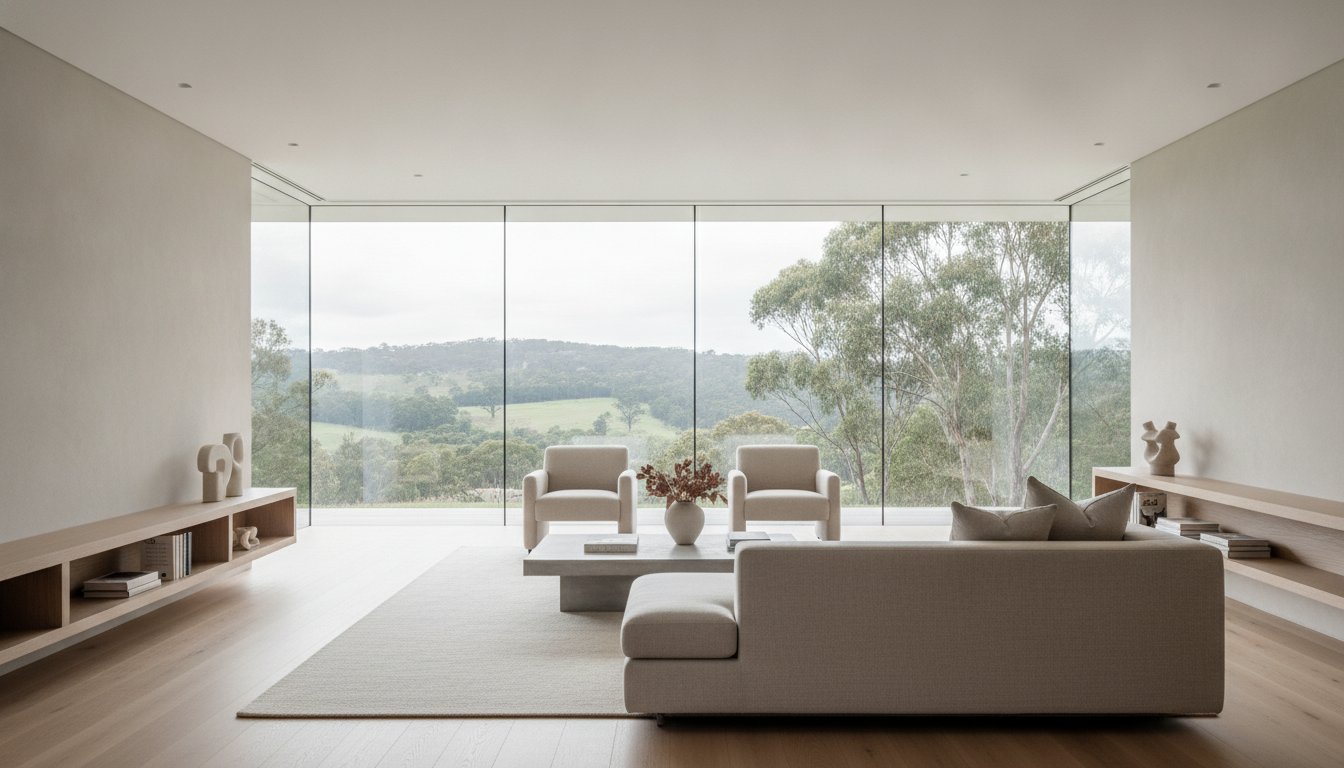
The light on the Central Coast is a living thing. It’s sharp, brilliant, and carries a unique clarity as it bounces off the Tasman Sea and filters through our local eucalypts. When you consider ceiling and wall painting central coast, you aren't just selecting a colour palette. You're actually designing the way natural light moves through your sanctuary. Walls aren't merely boundaries; they're vast canvases that reflect your lifestyle and protect your family's legacy. A master craftsman understands that a room's atmosphere is dictated by the dialogue between these vertical and horizontal planes.
The psychological impact of a crisp, clean interior is profound. It provides a sense of order and calm that mirrors the coastal horizon, turning a house into a true home. Beyond the immediate aesthetic joy, investing in professional living room painting central coast is a strategic move for your property's future. With the median house price in our region reaching $1,103,441 in 2026, maintaining a high-standard interior is essential for preserving your asset's value. A flawless finish suggests a well-maintained home, building immediate trust with guests and future buyers alike.
The Central Coast Aesthetic: Light and Air
Our local light has a high salt content, which can make certain "cool" whites look clinical or even slightly blue under the midday sun. Conversely, "warm" whites might turn unexpectedly muddy during those golden afternoon hours. A professional knows how to balance these tones to maximise natural light without losing the room's warmth. In our popular open-plan homes, creating a seamless flow between the kitchen and living areas requires a disciplined approach to sheen levels. We focus on how light travels across large expanses, ensuring the transition from wall to ceiling feels airy and unrestricted.
The "Fifth Wall" Philosophy
Many homeowners overlook the ceiling, yet it’s the largest unobstructed surface in any room. We view it as the "fifth wall." A standard, flat "ceiling white" isn't always the best choice for every space. Sometimes, a subtle tint that complements the wall colour can dramatically increase the perceived height of a room, making a standard 2.4-metre ceiling feel significantly more expansive. Part of the professional painter's responsibilities involves assessing how the ceiling plane interacts with cornices and walls. By meticulously managing the junction between these surfaces, we create a cohesive architectural look that feels both deliberate and sophisticated. This attention to detail transforms a simple refresh into a lasting legacy of quality.
Step 1: Preparation – The Secret to a Long-Lasting NSW Finish
The true test of a master craftsman isn't how they hold a brush, but how they handle a scraper, a sponge, and a sanding block. In our coastal environment, a "quick coat" is a recipe for heartbreak. To achieve a professional standard of ceiling and wall painting central coast, we begin by transforming the room into a controlled workspace. This means more than just moving a sofa. We clear the area completely and deploy heavy-duty canvas drop sheets to protect your flooring. Plastic covers are fine for dust, but only thick canvas absorbs accidental drips and provides a safe, non-slip surface for our ladders.
For older properties in established areas like Gosford or Woy Woy, we take extra precautions. We strictly follow lead-safe work practices when dealing with aged layers of paint to ensure your home remains a healthy sanctuary. Once the environment is safe, we address the invisible enemies of a good finish: salt and oils. If you're feeling overwhelmed by the scale of the prep required, it's often best to partner with a local specialist who brings the right equipment and experience to the task.
Cleaning for the Coast: Removing Salt and Mould
Living near the water means our homes are constantly breathing in salt-laden air. This residue settles on your walls long before you notice it. We use a concentrated sugar soap solution to neutralise these deposits and cut through household oils around light switches and door frames. Salt-air residue acts as a microscopic barrier that prevents fresh paint from chemically bonding to the substrate, leading to premature flaking and peeling. We also look for "ghosting" or hidden mould spores near cornices, treating them with specialised anti-fungal washes to ensure they don't grow through your new finish.
Sanding and Priming: The Master’s Foundation
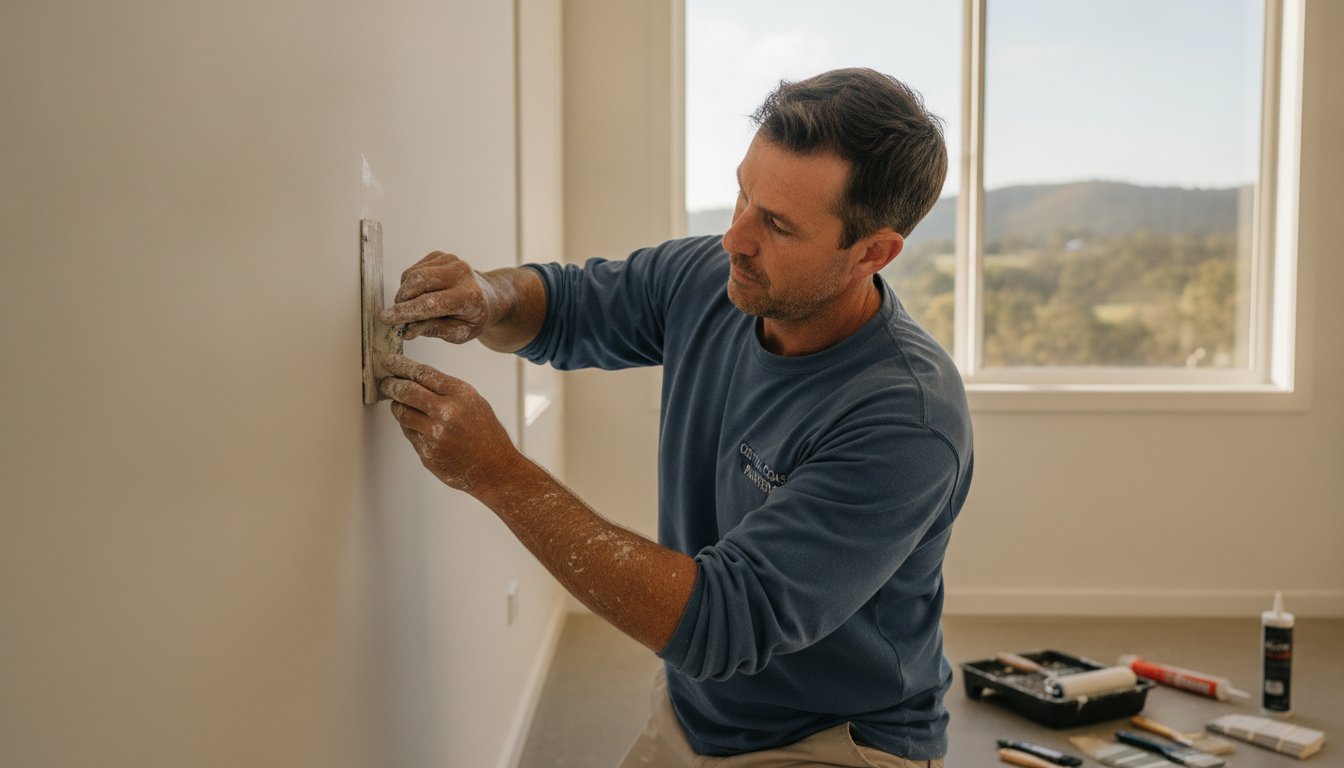
Once the walls are clean and dry, we hunt for imperfections. Every dent, scratch, or old nail hole is patched with a high-grade filler. We then sand the entire surface. For a glass-like wall finish, we typically use 150 to 180-grit sandpaper, which provides enough "tooth" for the paint to grip without leaving visible scratch marks. Priming is the final, non-negotiable step. We use stain-blocking primers on any water marks or tannin bleeds, ensuring the final colour remains pure and untainted. Finally, we seal the gaps in cornices and skirtings with a flexible acrylic sealant. This creates the sharp, professional silhouette that defines a premium interior renovation.
Step 2: Choosing Your Palette and Sheen for the Australian Climate
Selecting the right finish is where technical expertise meets aesthetic vision. In the intense glare of a Central Coast summer, your choice of sheen is just as vital as the colour itself. For any project involving ceiling and wall painting central coast, we must account for how our local light interacts with different surfaces. A master craftsman doesn't just look at a colour chip; they look at the orientation of your windows and the way light will travel across the room throughout the day.
For ceilings, a "Ceiling Flat" finish is non-negotiable. This specific type of paint is designed to be ultra-flat, meaning it has zero light reflection. Because ceilings are large, unobstructed planes, any hint of gloss will highlight every minor undulation or lap mark. The lack of light-bounce ensures that even the largest ceiling expanse looks like a single, unbroken sheet of velvet. When we move to the walls, the strategy shifts toward durability. If you are planning a kitchen and bathroom refresh central coast, we prioritise moisture-resistant formulas that incorporate anti-mould technology to protect your home's structural integrity.
Matte vs Satin: Which Sheen Wins?
The debate between matte and satin often comes down to the room's purpose. Matte finishes are exceptional at hiding wall imperfections, making them the preferred choice for older homes or rooms with significant natural light. They absorb light rather than reflecting it, providing a sophisticated, chalky depth. Conversely, satin or "silk" finishes offer superior washability. We often recommend these for high-traffic hallways and kids' bedrooms where sticky fingers and scuff marks are inevitable. The technical secret to avoiding lap marks on your ceiling is the "wet edge" technique, which is only achievable with a high-quality, slow-drying flat paint.
Navigating the 50 Shades of White
In our region, "white" is never just white. Cool whites like Dulux Lexicon are the darlings of modern beachfront designs. They feel crisp and clean, perfectly complementing the blue of the Tasman Sea. However, in a heritage Gosford cottage with smaller windows, a cool white can feel clinical or even grey. For these homes, Natural White brings a necessary glow, providing warmth without turning yellow. We always advise testing samples on different walls. Watch how the shadows move. A colour that looks perfect at 10:00 am might feel entirely different as the sun sets behind the hinterland. This careful selection process ensures your interior remains a timeless sanctuary for your family's legacy.

Step 3: Mastering the Technique – The Order of Operations
The sequence of your work dictates the final quality of your home's transformation. A master craftsman never approaches a room with a random plan. We follow a disciplined, logical flow that respects the laws of physics and the chemistry of the paint. When executing ceiling and wall painting central coast, the order of operations ensures that every surface is protected as the next one is refined. This methodical approach is what separates a DIY attempt from a professional legacy that looks stunning for years.
Once the ceiling and walls are perfected, we turn our attention to the finer details. Integrating door and architrave painting central coast serves as the final, defining touch. These timber elements act as the frame for your newly painted walls. If they aren't handled with the same level of precision, the entire room feels unfinished. By leaving the timber work until last, we ensure that any wall-paint splatter is covered by the final, durable enamel of the trim.
The Top-Down Method
Gravity is an unforgiving partner in the painting trade. We always finish the ceiling first. If you paint your walls before the ceiling, microscopic droplets of ceiling flat will inevitably settle on your fresh wall colour. We work in sections, carefully painting around light fittings and ceiling fans with a small brush before rolling the main expanse. We allow the ceiling paint to "wrap" slightly onto the top of the wall. This overlap ensures that when we later cut in the wall colour, there are no tiny gaps of unpainted plaster visible at the junction. It's about building layers that work together rather than competing for space.
Cutting In Like a Pro
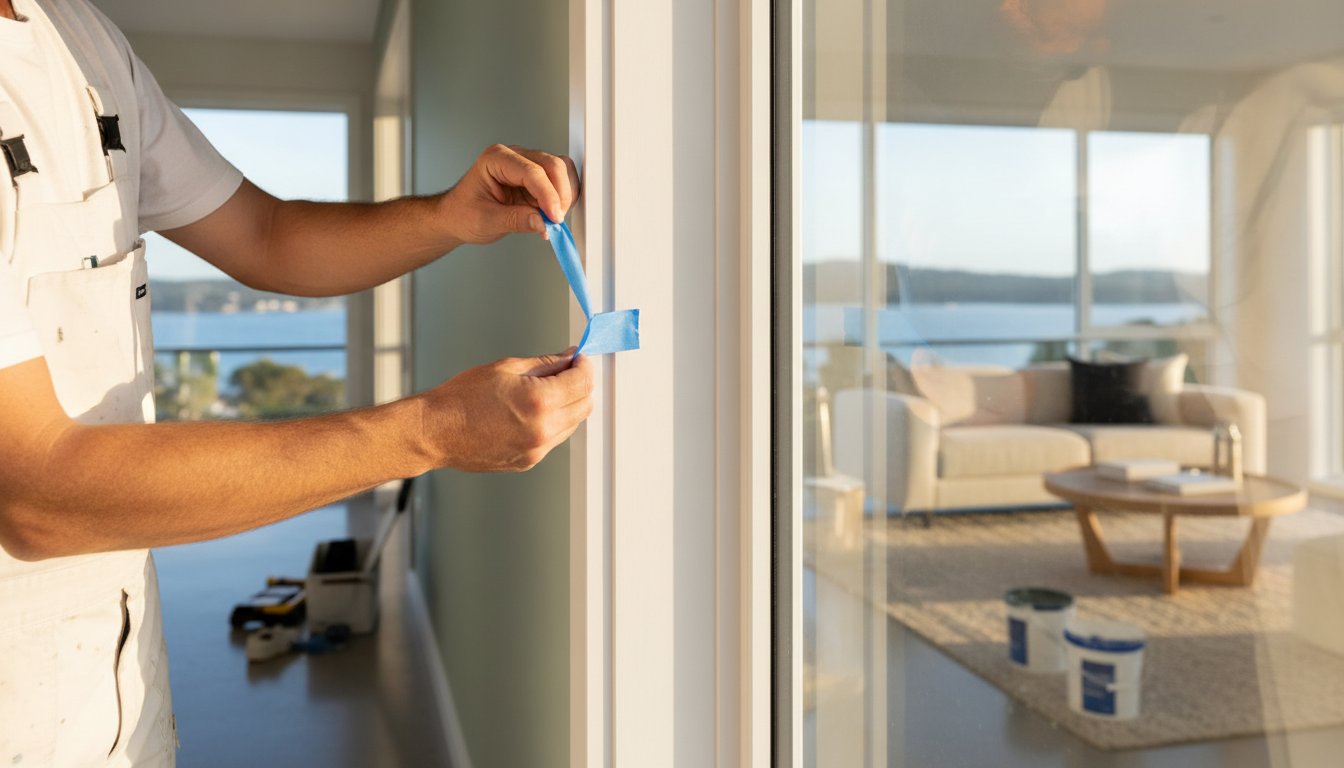
Sharp, clean lines at the wall-to-ceiling junction are the hallmark of a master. We use a high-quality angled sash brush to achieve this. Rather than relying on painter's tape, which can leak or peel away fresh paint, we use the "bead" technique. This involves loading the brush and gently pressing it against the surface so the bristles form a slight bead of paint. This bead is then guided along the line with a steady hand. It's a skill that takes years to perfect, but the result is a line so crisp it looks like it was drawn with a ruler. To ensure your home receives this level of professional care, you can book a master craftsman's assessment today.
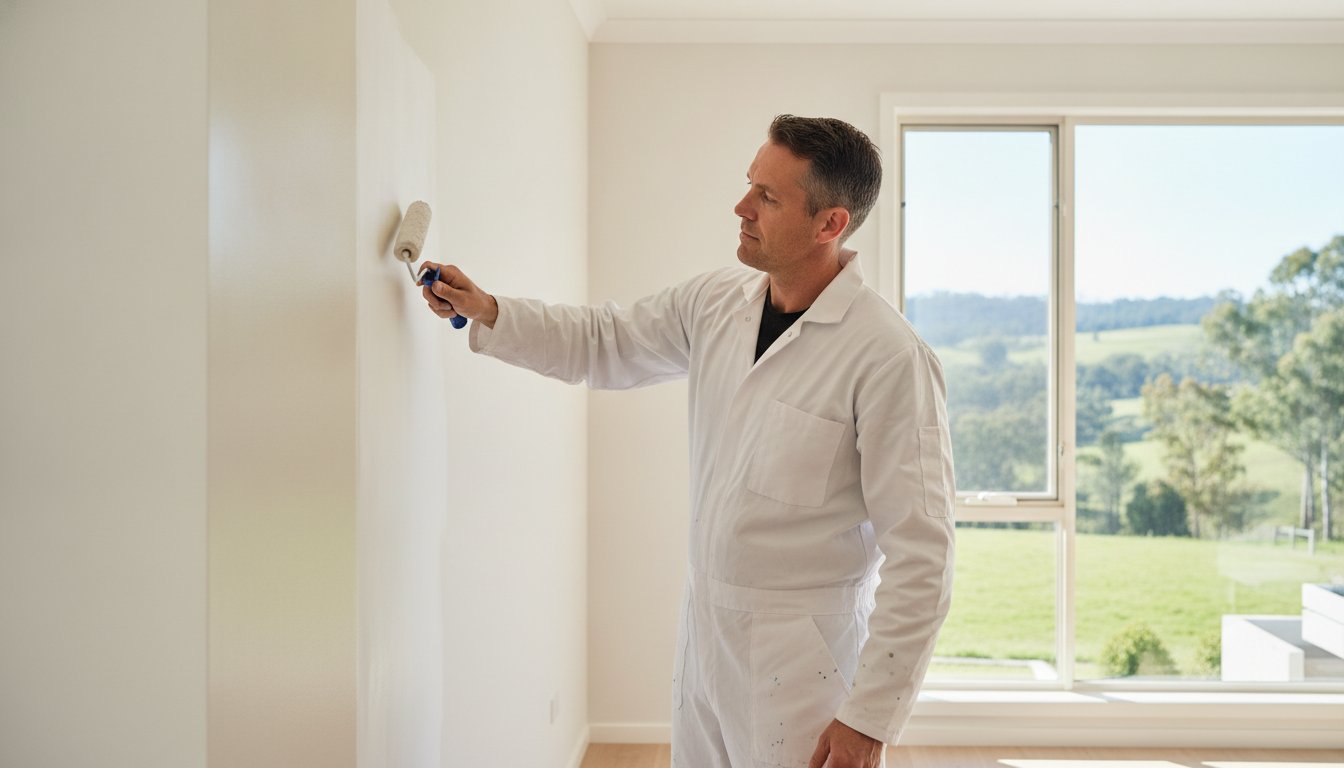
While cutting in provides the borders, the rolling technique provides the soul of the room. We maintain a "wet edge" at all times. This means we never let a section of paint dry before overlapping it with the next stroke. If the edge dries, you'll end up with visible lap marks—those ugly, shiny stripes that appear when the light hits the wall. By working quickly and methodically, we create a single, continuous film of colour that looks flawless from every angle of your Central Coast sanctuary.
Beyond the Brush: Achieving a Professional Legacy in Your Home
A home is far more than a structure of timber and plaster. It's a vessel for your family's history and a sanctuary from the bustling world. When we discuss ceiling and wall painting central coast, we aren't just talking about a change in colour. We're talking about preservation. There is a vast, often invisible chasm between a "quick coat" applied by a hurried contractor and the 28-year master craftsman finish we strive to provide. One is a temporary mask; the other is a lasting legacy that protects your surfaces and elevates your daily living experience.
Professional application extends the life of your interior by years. By following the meticulous preparation and technical sequences we've explored in previous sections, we create a finish that resists the typical coastal ailments of flaking and fading. We understand that inviting tradespeople into your home requires a high degree of trust. Our team operates with an organised efficiency that minimises disruption, ensuring your sanctuary remains peaceful while we work. Local expertise matters here. Suburbs from Gosford to the hinterland have specific microclimates, and a local who understands these nuances is a "safe pair of hands" for your most valuable asset.
The ROI of Quality Workmanship
In the current market, a flawless interior finish is a powerful driver of property value. With the median house price on the Central Coast reaching $1,103,441 in early 2026, the standard of your ceiling and wall painting central coast can significantly impact your return on investment. Buyers in our region are increasingly discerning, looking for homes that exhibit "resilient design" and meticulous maintenance. Doing it right the first time is always more cost-effective than paying for DIY corrections later. You gain immense peace of mind knowing your project is handled by a fully insured, local expert who adheres to the Australian Standard AS/NZS 2311:2017. This commitment to ethics and safety ensures your home’s value is preserved for the long term.
Your Home, Our Sanctuary
We treat every project with a protective attitude. Our commitment to clean work sites and respectful service means we leave nothing behind but a beautiful finish. We're well-versed in the unique challenges of Central Coast weather, from sudden humidity spikes to salt-laden breezes, and we adjust our drying times and application methods accordingly. This tailored approach ensures the paint cures perfectly, regardless of the season. Your home deserves a finish that reflects its importance in your life, crafted by someone who views the trade as a form of artistry.
Ready for a transformation that stands the test of time? Contact Martin at Central Coast House Painters today to discuss how we can bring a master craftsman’s touch to your interior.
Secure Your Home's Legacy with a Master's Touch
Mastering the interplay of light and surface is the final step in turning a house into a true sanctuary. From the meticulous removal of coastal salt residue to the disciplined application of non-reflective ceiling flats, every choice you make today dictates the longevity of your interior. Achieving a flawless result with ceiling and wall painting central coast requires a blend of technical precision and a deep respect for our local environment. You now understand how the right order of operations and a focus on the "fifth wall" can fundamentally change the volume and feel of your living spaces.
Your home deserves more than a standard refresh; it deserves the protection and artistry of a seasoned professional. With over 28 years of local experience, Martin provides a level of personal accountability that only an owner-operator can offer. We are specialists in residential interior restoration. We ensure your property remains a source of pride for decades. If you're ready to move beyond the "quick coat" and invest in a finish that stands the test of time, we're here to help. Get a Master Craftsman Quote for Your Central Coast Home and let's begin the journey of revitalising your sanctuary together.
Frequently Asked Questions
Should I paint the ceiling or the walls first?
Always paint the ceiling before you start on the walls. This "top-down" approach is a fundamental rule of the trade because it allows any microscopic splatter from the ceiling roller to land on unpainted wall surfaces. By finishing the ceiling first, we can also wrap the paint slightly onto the top of the wall, which creates a better surface for cutting in a sharp, professional line later.
How many coats of paint do I need for a professional finish on the Central Coast?
A professional standard almost always requires two full top coats over a correctly prepared and primed surface. While some products promise one-coat coverage, achieving the necessary depth of colour and durability for ceiling and wall painting central coast requires a proper film build. This ensures the finish can withstand our local humidity and regular household cleaning without wearing thin over time.
Does the coastal humidity affect how long my interior paint takes to dry?
High coastal humidity significantly extends both the drying and curing times of interior paint. In the damp air common to our region, the water in the paint evaporates more slowly, which can lead to a tacky finish or "surfactant leaching" if the second coat is applied too soon. We always monitor atmospheric conditions and use fans or ventilation to ensure each layer is fully set before proceeding.
What is the best paint finish for hiding imperfections on old plasterboard walls?
Matte or flat finishes are the superior choice for concealing imperfections on aged plasterboard. Because these finishes reflect very little light, they don't cast the tiny shadows that highlight dents, scratches, or poorly finished joins. By absorbing the light rather than bouncing it back, a matte finish creates a much smoother and more uniform appearance across large, sun-drenched wall expanses.
Can I paint over old silk or gloss paint with a matte finish?
You can certainly transition from a shiny finish to a matte one, but it requires thorough mechanical preparation. The existing gloss must be sanded back to a dull finish to create "tooth" for the new paint to grip. Once sanded, a high-adhesion sealer or transition primer is applied to ensure the new matte layer bonds permanently to the old surface without flaking or peeling.
How much does it typically cost to paint a standard living room in NSW?
The investment for painting a living room varies depending on the room's dimensions, the height of the ceilings, and the amount of patching required. Other factors include the condition of the timber trim and whether you're making a dramatic colour change. Because every home has unique architectural details, a personalised on-site assessment is the only way to provide an accurate figure for your specific project.
How do I choose the right white for a room with limited natural light?
For rooms with limited natural light, we recommend warm whites with subtle yellow or ochre undertones. Cool whites often look grey or clinical in low-light conditions, which can make a room feel uninviting. A warm white captures and reflects what little light is available more softly, providing a gentle glow that makes the space feel brighter and more comfortable.
Is it necessary to use a primer on every wall before repainting?
Priming is essential whenever you've performed repairs, are changing between different paint chemistries, or are moving between vastly different colours. While you might skip it for a simple refresh of the same colour, a primer ensures uniform "suction" across the entire surface. This leads to a more consistent sheen and better long-term adhesion for your ceiling and wall painting central coast project.